
TLDR
- A cohesive product line should feel connected through audience, purpose, design, packaging, and pricing.
- Start with one clear customer before adding more products.
- Use a simple product ladder: entry item, core product, bundle, and special release.
- Stickers, labels, inserts, and packaging details can help tie the whole collection together.
- The goal is not to make every product identical. The goal is to make everything feel like it belongs to the same brand.
A cohesive product line makes shopping easier. Customers can look at your products and understand the theme, the style, and the reason each item exists. Nothing feels random. Nothing looks like it wandered in from another business by accident.
Creating a cohesive product line does not mean selling the same idea over and over. It means building a collection where each product supports the others. The colors, packaging, price points, product names, and brand details all work together. That is what makes a small shop feel organized, professional, and easier to trust.
What Makes a Product Line Cohesive?
A product line is a group of related products sold under the same brand or category. A candle brand might sell several scents in the same jar style. An artist might sell stickers, prints, keychains, and pins based on the same characters. A food brand might sell three sauce flavors with matching labels and packaging.
A cohesive product line has a clear thread running through it. That thread can be:
- A shared customer
- A shared use case
- A shared visual style
- A shared theme or story
- A shared price tier
- A shared product format
- A shared packaging system
The product line does not need to be huge. In fact, smaller is often better at first. Three strong products that clearly belong together are better than twelve products that confuse people.
Start With One Clear Customer
Before you choose products, define the customer. Not in a complicated marketing document. Just enough to make better decisions.
Ask:
- Who is buying this?
- What do they care about?
- Where will they use the product?
- What would make them buy again?
- What would make this feel giftable, useful, or collectible?
A skincare brand selling to minimal, ingredient-conscious shoppers will build a different product line than a bright bath bomb brand selling to gift shops. A tattoo artist selling flash-inspired merch will make different choices than a children’s illustrator selling sticker sheets and classroom rewards.
This is where a lot of product lines lose focus. The business owner sees a product that could sell and adds it without asking if it fits. A product can be good and still not belong in the line.
A simple rule helps: if you cannot explain why the product belongs in one sentence, pause before adding it.
Choose a Core Product First
A cohesive product line usually starts with one anchor product. This is the item the rest of the line can build around.
For a small brand, the core product might be:
| Brand Type | Core Product Example |
|---|---|
| Artist | A best-selling character sticker or print |
| Candle Brand | A signature scent |
| Coffee Shop | A house blend |
| Skincare Brand | A daily moisturizer |
| Bakery | A flagship cookie box |
| Outdoor Brand | A logo sticker or patch |
| Boutique | A seasonal gift set |
Once you know the core product, you can add related items that make sense. A candle brand can add matching wax melts, sample tins, and gift boxes. An artist can add sticker sheets, mini prints, and limited holo stickers. A coffee brand can add bag labels, loyalty cards, mugs, and seasonal roast stickers.
This keeps the product line grounded. The core product acts like a center point, so new items do not pull the brand in every direction.
Build a Simple Product Ladder
A product ladder gives customers different ways to buy from you. It also makes the product line easier to organize.
A basic product ladder might look like this:
| Tier | Purpose | Examples |
|---|---|---|
| Entry item | Easy first purchase | Stickers, samples, postcards, small labels |
| Core item | Main product | Candles, prints, coffee bags, apparel, jars |
| Bundle | Higher order value | Gift sets, sticker packs, product trios |
| Special release | Limited or seasonal interest | Holographic stickers, seasonal packaging, artist drops |
This structure works because not every customer is ready to buy the main product right away. A $3 or $5 item can introduce someone to your brand. A bundle can help a repeat customer buy more. A limited release gives fans a reason to come back.
For artists, custom die cut stickers are a useful entry item because they turn a logo, character, phrase, or illustration into something easy to buy and easy to share. For product brands, stickers can work as packaging seals, thank-you extras, or brand inserts.
Use Design Rules, Not Random Inspiration
A cohesive product line needs design rules. They do not need to be complicated, but they do need to exist.
Start with:
- 2 to 4 main colors
- 1 to 2 accent colors
- 1 primary font
- 1 secondary font, if needed
- A consistent logo placement
- A consistent photography style
- A consistent label or sticker shape
- A repeatable packaging approach
These rules give your product line structure. They also make future product decisions faster.
For example, a tea brand might use soft cream packaging, botanical line art, one serif font, and small color changes for each flavor. A streetwear artist might use bold black-and-white graphics with one bright accent color. A pet product brand might use rounded shapes, playful icons, and simple product names.
The point is not to make every item identical. It is to make every item recognizable.
Create Product Families Within the Line
A product family is a smaller group within your product line. This helps customers understand the collection.
For example, an artist could organize merch like this:
| Product Family | Items |
|---|---|
| Core Characters | Die cut stickers, mini prints, keychains |
| Seasonal Drops | Holiday stickers, limited prints, themed sheets |
| Small Add-Ons | Bookmarks, postcards, buttons |
| Premium Items | Holographic stickers, signed prints, bundles |
A food brand could do this:
| Product Family | Items |
|---|---|
| Original Line | Main flavors or best sellers |
| Seasonal Line | Limited flavors or holiday packaging |
| Gift Line | Bundles, sampler packs, boxed sets |
| Packaging Extras | Seals, labels, thank-you stickers |
Product families help prevent clutter. Instead of one long list of items, the customer sees clear groups. That makes the shop feel easier to browse.
Keep Packaging Consistent
Packaging is one of the fastest ways to make a product line feel cohesive. Even simple packaging can do a lot.
You do not need expensive custom boxes to make products feel connected. You can use:
- Matching labels
- Branded packaging stickers
- Consistent backing cards
- Thank-you inserts
- Color-coded product seals
- Similar product photography
- Matching tissue or mailers
- Repeated icon styles
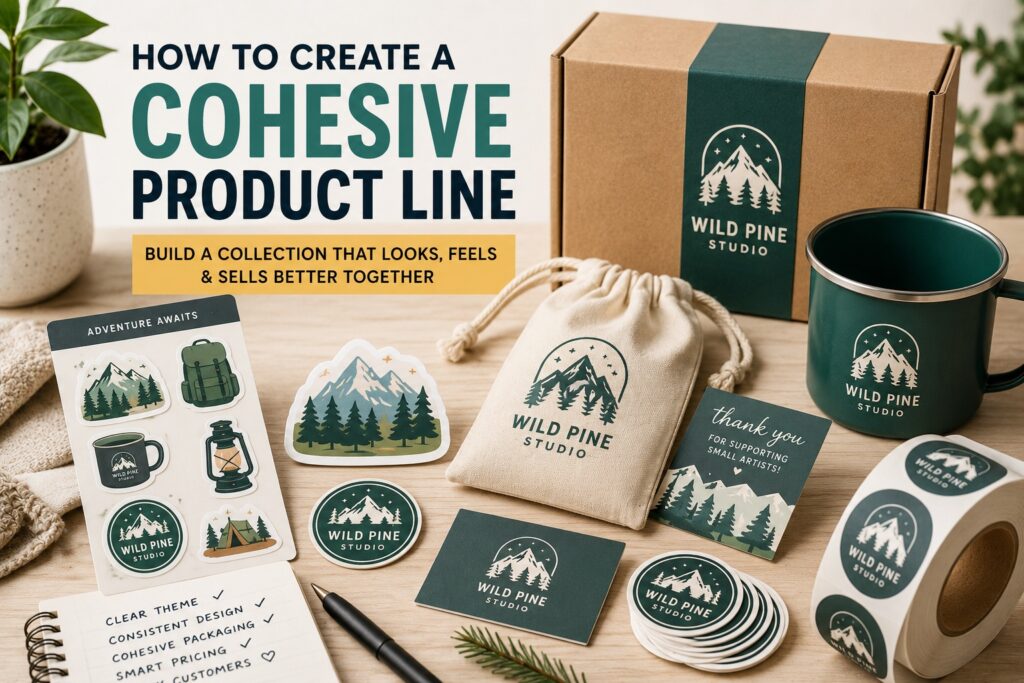
For small shops, stickers and labels are especially practical because they let you brand plain packaging without ordering a huge run of custom boxes. A simple kraft box with a clean label can look polished when the label, product name, and color system are consistent.
For packaging-heavy product lines, custom sticker rolls are useful because they make labels and seals easier to apply in larger quantities. This works well for jars, bottles, boxes, bags, candles, cosmetics, food packaging, and retail-ready products.
Use Stickers to Connect the Collection
Stickers can do more than promote a brand. They can help organize the product line itself.
Use stickers to:
- Mark different scents, flavors, or sizes
- Add seasonal details without redesigning the full package
- Seal boxes or mailers
- Create matching product inserts
- Add small thank-you gifts
- Label sample packs
- Build sticker packs around product themes
- Turn best-selling art into low-risk merch
This is especially useful when the product line is still growing. Instead of redesigning every piece of packaging, you can use a sticker system to test new ideas. A seasonal candle, limited coffee roast, new sauce flavor, or artist drop can feel connected to the main line through a matching sticker or label.
If your product line includes several small designs, sticker sheets for product collections can help turn related artwork, icons, or brand marks into one finished item. Sticker sheets also make sense for artists, teachers, stationery shops, boutiques, and subscription box brands.
Make Variations Easy to Understand
A product line becomes confusing when customers cannot tell the difference between products.
Avoid names like:
- “Original”
- “Classic”
- “Signature”
- “Essential”
- “Standard”
These can work, but only if the difference is obvious. If every product name sounds important but none of them explain the difference, customers may hesitate.
Use clear variation systems:
| Product Type | Clear Variation Method |
|---|---|
| Candles | Scent family and color |
| Coffee | Roast level and origin |
| Skincare | Skin type or routine step |
| Art merch | Character, theme, or collection |
| Food | Flavor, heat level, or size |
| Stickers | Finish, size, or pack theme |
A good product line makes comparison easy. Customers should be able to answer, “Which one is for me?” without reading every detail twice.
Add a Limited Item Without Breaking the Line
Limited releases can be useful, but they should still fit the brand.
A limited item might be:
- A seasonal flavor
- A holiday label
- A special sticker finish
- A limited art print
- A gift bundle
- A new colorway
- A collector edition
The mistake is making the limited item so different that it feels disconnected. A Halloween label for a bakery can be fun. A random neon cyberpunk redesign for a soft cottage-style bakery may confuse people unless that contrast is part of the brand.
Special releases work best when one or two details change while the rest stays familiar. Change the finish, color, illustration, or packaging accent. Keep the logo, product naming, and overall structure consistent.
For artists and merch brands, holographic stickers for limited releases can give an existing design a special-edition feel without creating a totally new product category.
Price the Line With Intention
A cohesive product line should have clear price points. If everything is the same price, customers may not understand the difference. If prices are scattered, the line can feel random.
A simple pricing structure might include:
- Entry products: $3 to $8
- Core products: $10 to $35
- Bundles: $25 to $75
- Special releases: priced higher when the materials, size, or limited nature support it
The numbers will change by product type, but the structure matters. Customers should understand why one item costs more than another.
For example, a standard sticker should not cost the same as a holographic sticker if the specialty material costs more and feels more collectible. A single candle should not feel too close in price to a three-candle gift set. A mini print and a signed limited print should feel clearly different.
Good pricing helps the whole product line make sense.
Test Before Expanding Too Far
A cohesive product line does not need to launch with twenty products. In most cases, that creates more risk.
Start with a smaller set:
- 1 core product
- 2 to 3 variations
- 1 entry item
- 1 bundle
- 1 packaging or insert system
Then watch what customers actually buy.
Look for:
- Which products sell first
- Which products get compliments but few purchases
- Which items customers buy together
- Which colors, scents, flavors, or characters repeat well
- Which items are too much work for the profit
- Which products create repeat orders
Use real behavior to guide the next product. That is more reliable than guessing from your own excitement. Excitement matters, but inventory still needs to move.
Examples of Cohesive Product Lines
Artist Merch Line
An illustrator starts with three popular characters. They create die cut stickers for each character, a sticker sheet with all three, two mini prints, and a limited holographic version of the most popular design.
The line feels cohesive because the characters share a style, the packaging uses the same backing card, and the prices move from small impulse buys to higher-value art prints.
Candle Brand
A candle brand launches with four scents in the same jar size. Each scent has a matching label color, but the typography, logo placement, and label shape stay the same. The brand adds a sampler pack and seasonal box seal.
The line feels cohesive because the customer can understand the scent options without the brand looking scattered.
Coffee Brand
A coffee roaster sells three roasts: light, medium, and dark. The bags use matching labels with color-coded roast levels. The brand adds a sticker to each order and creates a sampler bundle for new customers.
The line feels cohesive because each item has a clear role. Nothing feels accidental.
Common Product Line Mistakes
The first mistake is adding products because they are trendy, not because they fit. A trendy item can still be wrong for your brand.
The second mistake is changing the design system too often. If every product uses different fonts, colors, and label styles, customers may not recognize the collection as one brand.
The third mistake is launching too many products at once. More products mean more photos, more listings, more inventory, more packaging, and more decisions.
The fourth mistake is skipping entry-level products. Small items like stickers, samples, postcards, and add-ons can make it easier for new customers to try the brand.
The fifth mistake is not creating bundles. Bundles help customers understand what goes together and can raise order value without pushing people into a hard sell.
Product Line Checklist
Before adding a new product, ask:
- Does this product serve the same customer?
- Does it fit the brand’s visual style?
- Does it support the core product?
- Does it fill a clear role in the product ladder?
- Can the packaging match the rest of the line?
- Is the price point easy to understand?
- Can this product be bundled with another item?
- Does it create a reason for customers to come back?
- Do we have the time and budget to support it?
- Would removing this product make the line clearer?
That last question is useful. Sometimes the best product line decision is not adding something.
Conclusion
A cohesive product line is easier to understand, easier to shop, and easier to grow. Start with one clear customer and one core product. Build related variations, entry items, bundles, and special releases around that center point.
Keep the visual system steady. Use packaging details, labels, and stickers to connect the collection. Test small before expanding too far. And make sure every product has a reason to exist.
A product line does not need to be complicated to feel professional. It needs structure, consistency, and a clear point of view.