
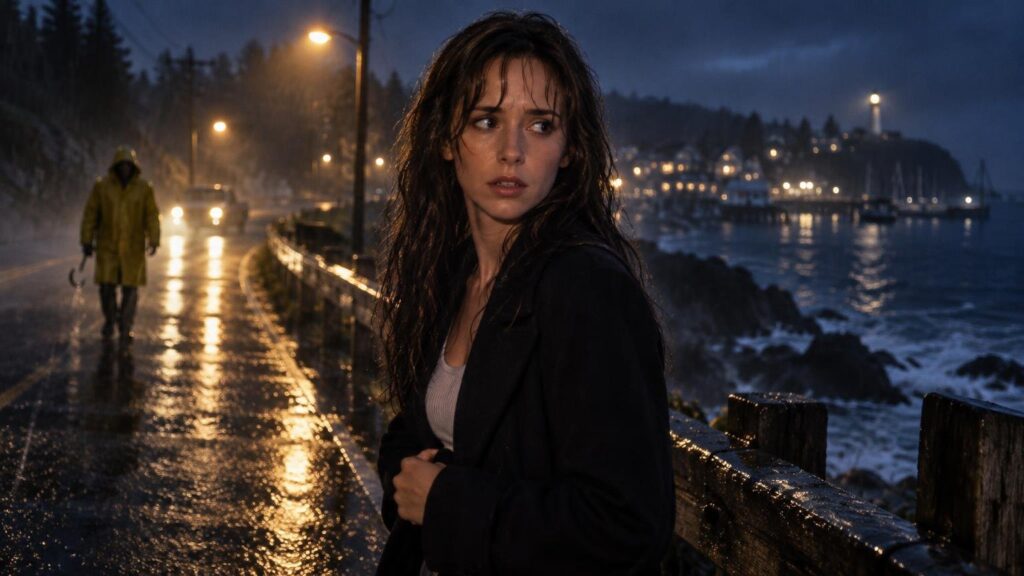
TLDR: I Know What You Did Last Summer remains such a vivid piece of 1997 horror because it combines a clean slasher premise with guilt, romantic tension and four young characters whose lives fracture in different ways. Jennifer Love Hewitt’s Julie James is the film’s emotional center, but the entire ensemble helps turn a hook-wielding pursuit into a distinctly late-1990s story about trying—and failing—to bury the past.
For anyone searching for I Know What You Did Last Summer 1997 revisited, the essential answer is that the movie still works best as a character-driven suspense film rather than merely a collection of kills. Its fashions and heightened teen melodrama immediately identify its era, yet Julie’s isolation, Helen’s disappointment, Barry’s aggression and Ray’s guarded behavior give the central secret consequences beyond the arrival of a killer.
That balance also explains why Jennifer Love Hewitt remains the most useful lens for a rewatch. Julie carries the group’s guilt most visibly. While the others try to contain, deny or outrun what happened, she looks as though the secret has followed her into every room.
The essential facts behind the 1997 film
I Know What You Did Last Summer opened in the United States on October 17, 1997. Jim Gillespie directed it, Kevin Williamson wrote the screenplay, and the story was adapted from Lois Duncan’s 1973 novel of the same name. The American Film Institute lists a running time of about 100 minutes. Readers looking for the production credits can consult the AFI Catalog entry for the film.
The four central friends are Julie James, played by Jennifer Love Hewitt; Helen Shivers, played by Sarah Michelle Gellar; Barry Cox, played by Ryan Phillippe; and Ray Bronson, played by Freddie Prinze Jr. After a nighttime accident, they conceal what happened and agree to keep it secret. One year later, a threatening message announces that someone knows what they did. Sony’s official synopsis presents that concealed accident and its delayed consequences as the movie’s defining premise.
The setup is efficient because it creates two threats at once. There is the visible danger represented by the stalker, but there is also the possibility that any member of the group could expose the others. Every reunion therefore carries suspicion before the killer even enters the scene.
Why Julie James is the center of the movie
Julie is not introduced as an invulnerable horror heroine. When the story resumes a year after the accident, she appears diminished by what the group did. Her earlier closeness with Ray has been disrupted, her friendships have weakened, and returning home forces her back into the place where the secret began.
Hewitt plays that change through restraint as much as panic. Julie watches people carefully, hesitates before trusting them and appears to understand that solving the mystery will require reopening the event everyone else wants sealed. Her fear is physical once the pursuit intensifies, but the character’s defining struggle is moral: she cannot make the past disappear simply by remaining silent.
That makes Julie different from a purely reactive “final girl,” the horror term for the surviving young woman who confronts the killer. She investigates because she needs an answer, but she also needs to determine what responsibility looks like after a terrible decision. The movie does not turn into a sober moral drama, nor should it. It remains a glossy teen slasher. Still, Hewitt gives its central gimmick an emotional cost.
The role also occupies an important place in her broader body of work. It captures the transition between the vulnerable emotional directness associated with her 1990s television work and the genre-leading presence she would later bring to supernatural television. That progression is easier to see within a fuller Jennifer Love Hewitt career timeline.
The ensemble gives one secret four consequences
Julie may be the anchor, but the film’s design depends upon four contrasting responses to the same night. Barry tries to regain control through intimidation. Helen faces the gap between the future she imagined and the life to which she has returned. Ray remains difficult to read, especially because his separation from Julie creates emotional and narrative uncertainty.
Helen is particularly important to the rewatch value. Her beauty-queen confidence initially makes her look like the character most securely attached to the film’s glossy teen world. Her later vulnerability exposes how quickly that identity can collapse. The extended pursuit involving Helen works because the danger arrives after the movie has shown what she believes she has already lost.
Barry supplies volatility, while Ray complicates Julie’s search for someone she can trust. These are broad genre characterizations, but the actors give them enough distinction that the group never feels interchangeable. The secret damages each person according to what he or she valued before the accident.
The Scream connection—and an important difference
The connection to Scream is direct but should not be overstated: Kevin Williamson wrote both screenplays, and Sony explicitly promotes I Know What You Did Last Summer as coming from the writer of Scream. Both films place attractive young characters inside self-aware late-1990s genre entertainment, but their rhythms are different.
Scream foregrounds horror knowledge, verbal play and commentary on genre rules. I Know What You Did Last Summer is more earnest. Its characters are not primarily trying to identify the kind of movie they inhabit; they are trying to keep a shared lie from destroying them. The result is less playful and more melodramatic, with romance, suspicion and guilt doing much of the work between suspense sequences.
That earnestness is one reason the film now feels so tied to its moment. It belongs to the polished youth culture surrounding late-1990s film and television, but it is not embarrassed by heightened emotion. The actors are allowed to look frightened, wounded and furious without every scene being punctured by a joke.
I Know What You Did Last Summer 1997 revisited as a period piece
On a modern rewatch, the film’s period identity extends beyond clothes or hairstyles. Information travels differently. Characters cannot instantly resolve uncertainty through smartphones, location sharing or a quick search. A letter, a newspaper clipping or an unanswered question can redirect the investigation because knowledge remains fragmented.
The coastal atmosphere is equally important. Open roads, fishing imagery, celebrations and shadowed waterfront spaces allow the killer’s hook and rain gear to feel connected to the community rather than chosen at random. Bright public activity can turn threatening with a small change in perspective. The movie repeatedly places danger near ordinary local life, leaving its characters visible yet isolated.
Its most effective suspense passages also understand that recognition is frightening. A figure glimpsed at a distance, an object placed where it should not be or evidence that vanishes before anyone else can see it makes Julie question not only who is watching but whether anyone will believe her. The movie is strongest when it stretches that uncertainty instead of rushing toward an attack.
For a home rewatch, the practical choice is to approach it as a suspense melodrama from 1997 rather than expect the pace or brutality of a contemporary slasher. Viewers interested in presentation options can also read about the film’s 4K Ultra HD release.
Its commercial success confirmed the premise had connected
The film was a substantial theatrical success. The Numbers reports an opening weekend of about $15.82 million, a domestic total of approximately $72.25 million and a worldwide total of approximately $125.25 million. Box-office databases can differ in their accounting, so those figures are best treated as attributed totals rather than universal final numbers.
Contemporary context makes the opening especially revealing. The Los Angeles Times reported that it achieved the second-highest October opening to that point in 1997. That does not establish a complete picture of critical reception, but it does show that audiences responded immediately. The title, Williamson connection, young cast and direct threat-based premise gave the film a strong commercial identity.
How the later franchise entries connect
The title has since been used across sequels, television and a later film, which can make the continuity look more complicated than it is. The clearest starting guide is:
| Entry | Connection to the 1997 film |
|---|---|
| I Know What You Did Last Summer (1997) | The original film continuity and Jennifer Love Hewitt’s first appearance as Julie James. |
| I Still Know What You Did Last Summer (1998) | A direct sequel in which Hewitt returns as Julie James. |
| I Know What You Did Last Summer (2021) | A separate television adaptation written and executive produced by Sara Goodman, rather than a continuation centered on the original movie ensemble. |
| I Know What You Did Last Summer (2025) | Sony’s synopsis follows a new group seeking help from survivors of the 1997 Southport events, explicitly connecting its premise to the original film. |
The distinction matters because a shared title does not always mean a shared storyline. The 2021 series reinterprets the basic material for television. By contrast, the official description of the 2025 film deliberately invokes survivors and events from 1997, making memory of the original part of its premise. For a wider view of Hewitt’s recent screen work, see the site’s 2025 Jennifer Love Hewitt update.
Why the original still defines its era
I Know What You Did Last Summer defines its particular late-1990s moment not because every element began there, but because it gathers so many qualities of the period into one compact film: a television-familiar young ensemble, an irresistible high-concept title, sincere romantic conflict, polished suspense and a killer silhouette that can be understood instantly.
Most importantly, its nostalgia does not depend only on surfaces. Julie James gives the film a reason to revisit the secret rather than merely remember the fashions. Hewitt plays survival as something messier than defeating an attacker. Julie must endure the collapse of trust, confront the consequences of silence and decide to keep looking when everyone around her offers another reason to stop.
That is the best way to return to the film now: watch the ensemble, but follow Julie. The hook may be the image that sells the story, yet Hewitt’s anxious, determined performance is what holds its guilt, suspense and unmistakable 1997 atmosphere together.
References
- AFI|Catalog
- I KNOW WHAT YOU DID LAST SUMMER (1997) | Sony Pictures Entertainment
- I Know What You Did Last Summer (1997) – Box Office and Financial Information
- The teen thriller "I Know What You… – Los Angeles Times
- AFI|Catalog
- I KNOW WHAT YOU DID LAST SUMMER | Sony Pictures Entertainment
- I KNOW WHAT YOU DID LAST SUMMER | Sony Pictures Entertainment